Sanctuary of Women: Blog

The Magdalene’s Blessing

July 21st, 2013


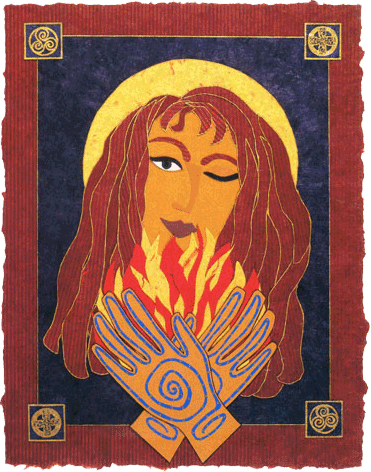
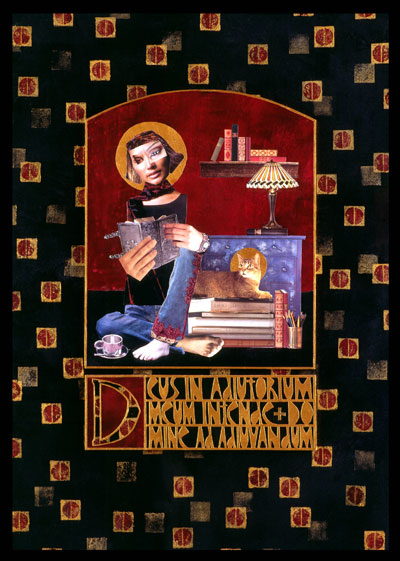
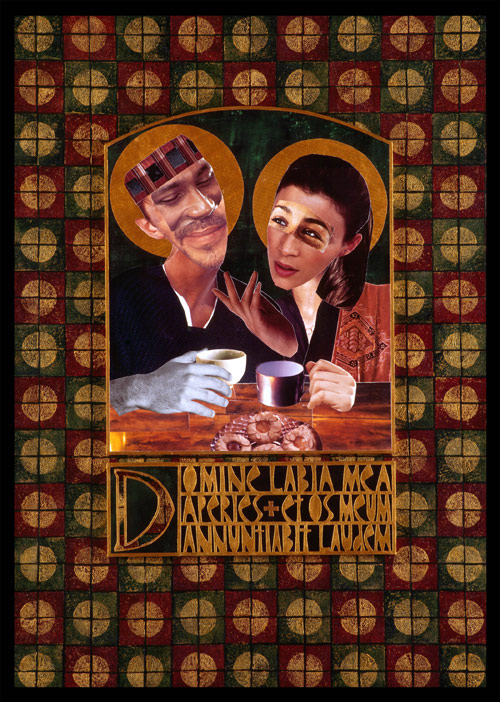
Image: The Blessing Cups: Jesus and Mary Magdalene at Tea
© Jan L. Richardson

Blessings to you on this eve of the Feast of Mary Magdalene! Earlier this year, at the Women’s Convocation in Bellevue, Washington—a marvelous gathering whose speakers included Sr. Helen Prejean and Clarissa Pinkola Estés—I had the opportunity to speak on the theme of “Illuminating the Threshold.” Mary Magdalene, whose story is so associated with thresholds, easily found her way into my talk. As Gary and I traveled across the country for the convocation, I composed a blessing inspired by the Magdalene’s encounter with Jesus on Easter morning. I offered the blessing to those who came to my talk—those who, like me, find themselves fascinated by threshold spaces and the invitations they hold.

As we celebrate the Magdalene’s feast day (July 22), I offer this blessing to you. Wherever you are, whatever threshold you are on or are approaching, may courage and grace attend you.

The Magdalene’s Blessing

You hardly imagined
standing here,
everything you ever loved
suddenly returned to you,
looking you in the eye
and calling your name.

And now
you do not know
how to abide this ache
in the center
of your chest,
where a door
slams shut
and swings open
at the same time,
turning on the hinge
of your aching
and hopeful heart.

I tell you,
this is not a banishment
from the garden.

This is an invitation,
a choice,
a threshold,
a gate.

This is your life
calling to you
from a place
you could never
have dreamed,
but now that you
have glimpsed its edge,
you cannot imagine
choosing any other way.

So let the tears come
as anointing,
as consecration,
and then
let them go.

Let this blessing
gather itself around you.

Let it give you
what you will need
for this journey.

You will not remember
the words—
they do not matter.

All you need to remember
is how it sounded
when you stood
in the place of death
and heard the living
call your name.

© Jan Richardson

2017 update: This blessing appears in my book Circle of Grace: A Book of Blessings for the Seasons.

P.S. The Hours of Mary Magdalene is a video that my singer/songwriter husband and I produced, intertwining my series of images inspired by the life and legends of the Magdalene with his gorgeous and haunting song, “Mary Magdalena.” Please note that if you click the Vimeo logo in the player below (in the bottom right corner), it will take you directly to a larger version of the video.

For a previous reflection on the Feast of Mary Magdalene, click the image or title below.
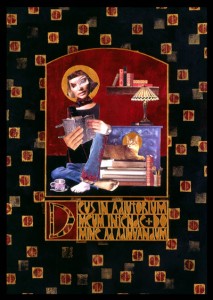
At Her Prayers: Mary Magdalene with a Book of Hours
Feast of Mary Magdalene

And don’t miss…

Gary and I have created an Art + Faith page on Facebook, where we’re currently featuring the remarkable artwork of our friends who teach with us in the Liturgical Arts Weeks at the amazing Grünewald Guild. We would love for you to stop by, “like” the page, and be part of the creative conversation that’s unfolding there. And be sure to check out this summer’s Liturgical Arts Weeks at the Guild. We have just a few spots left—does one of them have your name on it? For a glimpse of the Guild, visit this post: Where Heaven and Earth Meet.
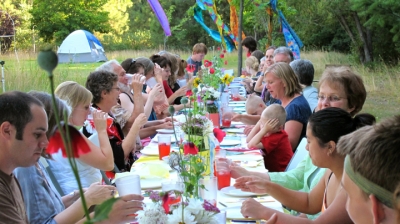

Liturgical Arts Week at the Grünewald Guild
On the Threshold of Lent: Return

February 11th, 2013

Advent and Christmas are not so very far behind us, and already we’re standing at the edge of Lent! As Ash Wednesday draws near, I want to let you know that Gary and I will be offering an online retreat during Lent. We so enjoyed traveling with many of you during our online Advent retreat, and it was wonderful also to hear from lots of you who enjoyed the Women’s Christmas retreat. We would love to journey with you during the coming season!

If you haven’t already read about the retreat, here’s a bit of info:

RETURN: An Online Journey into Lent & Easter
February 13 – March 31

This is a Lenten retreat for people who don’t have time for a Lenten retreat (and for those who do!). You do not have to show up at a particular place or time. You can do this retreat from anywhere you are, and you’re welcome to engage the retreat as much or as little as you wish.

Travel toward Easter in the company of folks who want to move through this season with mindfulness and grace. This online retreat is not about adding one more thing to your schedule. It is about helping you find spaces for reflection that draw you deep into the mysteries and gifts of this season. This retreat intertwines reflection, art, music, and community, offering a space of elegant simplicity as you journey through Lent.

If you’re part of a group that would like to take the retreat together, we offer group discounts. Whether you’re part of a group that meets together in one place, such as a Bible study or book group, or a network of friends or colleagues stretched across the country or around the world, this retreat is a great way to travel through the season together.

If you’re hungry for a simple way to move deeply into this season, this retreat is for you. For more info and registration, visit Online Lenten Retreat or click the retreat logo above. That page also has a link to a FAQ page with further details. If you have any questions, or if you have any concerns about things that you think might hinder you from participating in the retreat, please do be sure to visit these pages. You’re also welcome to be in touch with me directly.

Deep blessings and gratitude to you as the new season begins.

Women’s Christmas: The Map You Make Yourself

January 4th, 2013


Wise Women Also Came © Jan L. Richardson

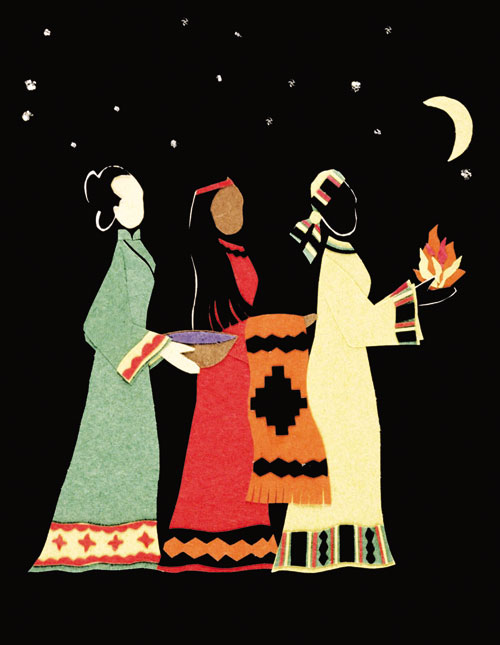
In some parts of the world, Epiphany (January 6, which brings the Christmas season to a close) is celebrated as Women’s Christmas. Originating in Ireland, where it is known as Nollaig na mBan, Women’s Christmas began as a day when the women, who often carried the domestic responsibilities all year, took Epiphany as an occasion to enjoy a break and celebrate together at the end of the holidays.

Whether your domestic duties are many or few, Women’s Christmas is a good time to pause and take a break from whatever has kept you busy and hurried in the past weeks or months. As the Christmas season comes to a close, this is an occasion both to celebrate with friends and also to spend time in reflection before diving into the responsibilities of this new year.

As a contribution to your contemplation and celebration, I’ve created a retreat for you to use for Women’s Christmas—or anytime you’re in need of a space of reflection. Titled “The Map You Make Yourself,” the retreat is designed as a mini-pilgrimage into your own life. With readings, blessings, and art, the retreat offers an invitation to ponder where your path has taken you, what you’re noticing in your life right now, and what you’re dreaming for the path ahead.

The retreat is very flexible, easily adaptable to your own purposes. You can do the retreat with friends near or far, or perhaps simply select a single reflection or two as a starting point for conversation. The retreat includes an introduction with some thoughts about how you might engage these reflections.

You can download the retreat as a PDF by clicking the link below. There’s no cost; think of it as my Women’s Christmas gift to you! You are welcome to make copies of the retreat to share with friends. And I’d be delighted for you to spread the word about the retreat by sharing this blog post; you can use any of the social media icons at the bottom of this post or simply forward the link to others.

Download the Women’s Christmas Retreat

I’ve also written a Women’s Christmas blessing for you. As we celebrate the day and enter into the year ahead, may you journey well and walk with wisdom.

The Map You Make Yourself
A Blessing for Women’s Christmas

You have looked
at so many doors
with longing,
wondering if your life
lay on the other side.

For today,
choose the door
that opens
to the inside.

Travel the most ancient way
of all:
the path that leads you
to the center
of your life.

No map
but the one
you make yourself.

No provision
but what you already carry
and the grace that comes
to those who walk
the pilgrim’s way.

Speak this blessing
as you set out
and watch how
your rhythm slows,
the cadence of the road
drawing you into the pace
that is your own.

Eat when hungry.
Rest when tired.
Listen to your dreaming.
Welcome detours
as doors deeper in.

Pray for protection.
Ask for the guidance you need.
Offer gladness
for the gifts that come
and then
let them go.

Do not expect
to return
by the same road.
Home is always
by another way
and you will know it
not by the light
that waits for you

but by the star
that blazes inside you
telling you
where you are
is holy
and you are welcome
here.

P.S. For another reflection on Epiphany, visit this post at my blog The Painted Prayerbook:

Epiphany: Blessing of the Magi

DECEMBER 2013 UPDATE: New Women’s Christmas Retreat coming soon!

We’ll soon have a brand-new retreat ready for Women’s Christmas 2014! It will be available shortly at the Women’s Christmas page here at the Sanctuary of Women site.

[The Wise Women Also Came image is © Jan L. Richardson from the book Night Visions: Searching the Shadows of Advent and Christmas. To use this image, please visit this page at Jan Richardson Images.]

Provision and Plenitude: Feast of Saint Brigid

January 29th, 2012


Brigid © Jan L. Richardson

This week offers us plenty of cause for celebration, with two feast days in store. February 1 is the Feast of Saint Brigid, the beloved Celtic saint whose leadership helped shape the early church in Ireland. Famous for her hospitality (“Every guest is Christ,” Brigid said), Brigid was a worker of wonders whose miracles often involved providing sustenance to those in need—sometimes giving folks what they didn’t even know they needed.

February 2 is Candlemas Day, also known as the Feast of the Presentation or the Feast of the Purification of Mary, marking the occasion when Mary and Joseph took Jesus to the Temple for the rites following a birth. Brigid, whose life inspired many legends about her powers—including the ability to move across time—appears among the stories of Jesus’ birth and his presentation in the Temple. (For more about Brigid’s connection with Candlemas, visit Feast of the Presentation/Candlemas at my blog The Painted Prayerbook.)

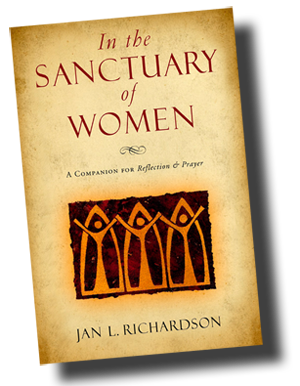
The monastic community that I’m part of takes its name from Saint Brigid, and I’m looking forward to celebrating this week with my sisters and brothers in Saint Brigid of Kildare Monastery. Here at Sanctuary of Women, I’d like to invite you to join in the festivities. To celebrate Brigid, here’s a reading from my book In the Sanctuary of Women, which devotes a chapter—a month’s worth of reflections—to this lively, fiery worker of wonders and to the themes and questions her life inspires us to explore in our own lives.

Provision

Most of Brigid’s recorded miracles are feats of provisioning by which she secures an abundance of fare for daily sustenance as well as for festive occasions. In Brigid’s presence, butter is replenished; the bacon she slips to a dog miraculously reappears in the pot; a stone turns to salt; water becomes milk or beer or, in one instance, an aphrodisiac. Her plenitude consciously echoes Christ’s miracles of provisioning—water into wine, a few loaves and fish into a feast—and embodies God’s abundant generosity. In a poem attributed to Brigid, she wishes she had a “lake of ale” to offer to the King of Kings.

The Vita Prima [one of the early accounts of Brigid’s life] relates this story:

Some clerics came to Brigit and preached the word of God. Afterwards Brigit said to her cook, “Get a meal ready for our distinguished guests.” The cook said in reply, “What shall I give them for dinner?” And Brigit said, “Give them bread and butter and onions and lots of courses.” The cook replied, “Yes, I will, but do you go to the church first because the cook hasn’t any of the things you mention!” And Brigit said to the cook, “Sweep the floor of the kitchen and shut it and go home and pray there and I shall go to the church.” Now at the sixth hour Brigit called the cook by clapping her hands and said to her, “It’s time to give food to the guests. Go to the kitchen and give them a generous helping of whatever you find there.” Then on opening the kitchen she found all the provisions that Brigit had mentioned and the provisions did not run short for seven days but were ample for both the guests and all of Brigit’s community, and nobody except Brigit and her holy cook knew where these provisions had come from or who had brought them.

As someone whose ministry involves raising my entire income, I find myself thinking a lot about provision. How do I keep food on my table and a roof over my head by my own power? Part of the answer lies in remembering that I don’t, in fact, do this alone. Over time I’ve learned to be more intentional about praying for provision. “Ask, seek, knock,” Jesus said. It stretches me sometimes, opening myself to pray about matters that seem so basic. Yet what we find in Brigid’s life—not to mention in the Gospels—is a persistent reminder that the mundane and the miraculous are inextricable. In the very stuff of our daily lives—food, shelter, work, community—God makes a home, looking for ways to offer us what we most need.

I’ve also learned to give thought to what I really need. For more than a decade I’ve lived in a studio apartment, a small space that affords continual opportunities for spiritual practice regarding possessions. I have to be vigilant about what crosses the threshold, discerning about what I bring in and what I need to let go of. Part of what I’ve discovered in this space is that often it takes only the tiniest thing to blow me away with its loveliness, its power, its provision.

Plenitude

At lunch today
it was the purple
of the olive pits
against my cobalt plate
that stunned me.

At tea,
the gold of peach
bloodstained by its stone.

I do not know
where the greater part
of the miracle lies:
that I should pause
to notice this,

or that I,
a woman of
such great hungers,
should be so well satisfied
by such small things.

Blessing

May the God of small things
delight you this day.

As we enter into Brigid’s feast, what are you in need of? Is there a deeper need that lives beneath this one? How do you ask for/pray for/seek the provision you need? How do you keep yourself open to its finding you in a form you did not expect? Is there someone who needs provision in a form that you could offer?

May you have a blessed and festive week!

For a previous reflection on Saint Brigid, please visit Golden, Sparkling Flame: Feast of St. Brigid.

Celebrating Women’s Christmas

January 4th, 2012


Wise Women Also Came © Jan L. Richardson

In some parts of the world, Epiphany (January 6, which brings the Christmas season to a close) is celebrated as “Women’s Christmas.” Originating in Ireland, where it is known as Nollaig na mBan, Women’s Christmas began as a day when the women, who often carried the domestic responsibilities all year, took Epiphany Day as an occasion to enjoy a break and celebrate together at the end of the holidays. (For more about Women’s Christmas, visit this article published in The Irish Times: Go on, have a cuppa tea on Nollaig na Mban.)

Whether your domestic commitments are many or few, Women’s Christmas offers an opportunity to pause and step back from whatever has kept you busy and hurried in the past weeks or months. As the Christmas season comes to a close, this is an occasion both to celebrate with friends and also to spend time in reflection before diving into the responsibilities of this new year.

I’m looking forward to spending some time with friends on Epiphany night and also savoring some quiet time as we enter the year. How might you celebrate Women’s Christmas this year? As you contemplate the coming months, what do you need for the path ahead?

To support you, I’ve created a mini-retreat especially for Women’s Christmas—or whenever you’re in need of some time for reflection. You can download the retreat as a PDF file at no cost. With readings and artwork, the retreat is designed to help you engage questions about where you are in your journey, how you want to travel through this year, what distinctive gift you might offer, and what you need to receive in order to do this.

The retreat is very flexible, easily adaptable to your own purposes. You can devote a day to it, or you can spread it out over several days. You can do the retreat with friends, perhaps selecting a single reflection or two as a starting point for conversation over tea or a meal as you celebrate the day. The retreat includes an introduction with some thoughts about how you might engage these reflections.

You can download the retreat as a PDF by clicking the link below. There’s no cost; think of it as my Women’s Christmas gift to you! You are welcome to make copies of the retreat to share with friends.

Click here to download the Women’s Christmas Retreat

I’ve also written a blessing for Women’s Christmas. As we move through the day and into the year ahead, may you journey well and walk with wisdom.

I Know How Far
A Blessing for Women’s Christmas

I know how far
you would walk
to offer what
is needed;
the lengths
you would go to
to provide for those
you hold dear.

I know how every road
you travel
begins in the hollow
of your chest,
in the chambers
of your heart;
how you measure
your steps
by the rhythm
of your pulse;
how you find
your way
across terrains
no map
could ever show.

No distance
no barrier
no expanse of time
would keep you
from propelling yourself
toward the place where
your heart has already
arrived.

But for a moment,
for one small space
of time,
could you pause
and in the quiet
wait
for the gifts
that have been gathering
around you,
the treasures borne
by those
who have been traveling
to welcome you
since the moment
you left home?

For another reflection on Epiphany, visit this post at my blog The Painted Prayerbook:

Epiphany: Blessing for Those Who Have Far to Travel

[The Wise Women Also Came image is © Jan L. Richardson from the book Night Visions: Searching the Shadows of Advent and Christmas.]

On the Feast of All Souls

November 2nd, 2011

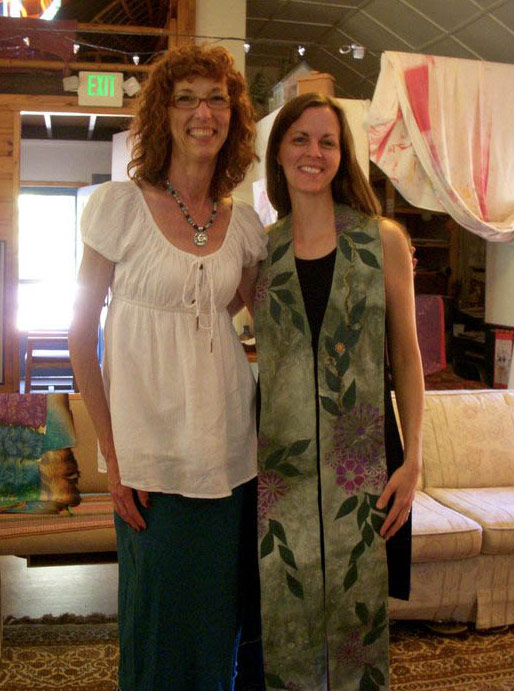
On our last evening of the Liturgical Arts Week at the Grünewald Guild this summer, we had a feast alongside the beautiful Guild garden. Dreamed up by my friend and fellow faculty member Laurie Clark (in the picture above), the feast was a wondrous occasion that wove together the strands of this year’s “Garden, Table, Story” theme that we had been exploring and savoring all week. I love how Laurie thinks—how with her artful spirit, deep imagination, sense of history, and remarkable eye for detail, she brings together the pieces to create something beautiful that evokes the presence of the sacred. (For a glimpse of her work, visit Laurie’s blog.) On the evening of the feast, Laurie, along with a team of helpers, created a whole experience that was a work of art.
We processed to the garden as a community carrying elements of the feast and took our places at the long tables that stretched down the length of the garden. As we sat, we found that Laurie had strewn small, carefully cut leaves along the tables. She invited us to write the name of someone we wished was at the feast. The leaves lingered throughout the festive meal, evoking memories of loved ones who had shared other tables with us.

The next morning, at our closing worship service (always a highlight of the Guild week, as folks share what they have created during their time there), Laurie presented me with a gift. During the night, she had taken one of the tablecloths (which she had made especially for the feast) and turned it into a stunning stole. Worked into the stole are all the leaves from the feast, bearing the names of those we remembered at the table. You can get a sense from the picture of how thrilled I am to have received such an astounding, exquisite gift.

I led our celebration of Communion during the service. Garbed in the stole—the feast stole, the table stole, the stole of memory and story—I spoke of how the table, and the Communion table especially, reminds us that when we eat together, we celebrate not only with those who are physically present with us. We celebrate too with all those around the world who gather at their own tables, and we celebrate with those no longer upon this earth but who continue to be part of our story and who linger close when we come to the table.

Today, November 2, is the Feast of All Souls. Along with the Feast of All Saints (or All Hallows) on November 1, this is a time for remembering those who have gone before. These days have roots in an ancient Celtic festival, during which it was believed that the veil between worlds became permeable. The Celtic folk have described such a time or space as a thin place: a space where past and present and future mingle, and heaven and earth meet.

On this day, I am remembering how a table can become a thin place: how when we gather in that space of memory and story, that space that touches all our senses and where we acknowledge our hungering, it opens up doorways to the past, and those who once shared our table somehow do so again.

On this Feast of All Souls, who is lingering close in your memories? What stories come to the surface this day? Where do you find those thin places where past, present, and future intertwine, and heaven and earth meet?

In these days, may a thin place open to you: a space of memory and hope, a realm where dream and possibility meet, a place where those who love you make their presence known and provide sustenance for the way ahead. Blessings.

P.S. I want to let you know I have a brand-new blog! It’s called Devotion Café, and I launched it this week to coincide with this trinity of days of Halloween-All Saints-All Souls, a time of year that I love. I’d be delighted for you to stop by and see my first post, On the Eve of All Hallows. For another reflection for these days, please see Inspired: On the Feast of All Saints at my blog The Painted Prayerbook.

A Spiral-Shaped Sanctuary

August 13th, 2011


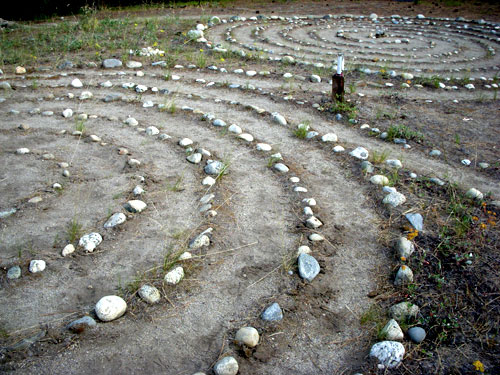
Grünewald Guild Labyrinth

This is the penultimate night of my two-week sojourn at the Grünewald Guild, a wondrous retreat center in the Cascade Mountains of Washington State where I teach every summer. Devoted to exploring and celebrating the connections between art and faith, the Guild is something of a second home for me—a place where I find my tribe.

With its beautiful setting, remarkable community, and artful spirit, the Guild offers much sanctuary. The past couple of weeks have provided many moments of connection and opportunities to savor the presence of the sacred. In conversations, in seeing what’s taking shape in the studios, in our morning and evening gatherings for Matins and Vespers, in the fellowship around the table or over teacups, there is a continual invitation to be present, to pay attention to how the Spirit moves and creates in community, and to find and offer sustenance with these folks who know what it’s like to live in the intersections of art and faith—an experience that’s often more difficult to come by in my life back in Florida.

I’ve been mindful, too, of seeking some spaces of quiet and solitude, though with having such a limited time here, I’m spending as much time with the community as my introverted self can handle. This evening, in need of a bit of time to myself as I approach the end of almost two weeks of being with others almost constantly, I took myself to the sanctuary of the labyrinth here at the Guild. It’s one of my absolute favorite labyrinths—a Celtic triple spiral laid out in stones, overlooking the Wenatchee River. It doesn’t matter where you enter the labyrinth—select any spiral, turn right or left, and the path will draw you in.

This evening I walked the triple-spiraled circuit once, and then again, and yet a third time, taking in the sounds of the river, the feel of my feet on the path, the rhythm of moving slowly. My brain, which typically keeps a perpetual monologue going as I ponder and process and chew on things throughout my waking moments, eased into the spiraling way, settling into the quiet, if not turning its chatter entirely off.

And so, as I savor the quiet of this evening, I find myself wondering: Where are you finding sanctuary these days? How are you experiencing the rhythms of solitude and community, and do you have the balance of these that you need? What paths are you traveling, and are they paths you are choosing mindfully and with intention, or have you found yourself upon them for some other reason? How do you want to be moving through these days?

I traveled the triple spiral one more time before I left, this time taking a video camera with me. Want to take a walk?

Walking Blessing

That each step
may be a shedding.
That you will let yourself
become lost.
That when it looks
like you’re going backwards
you may be making progress.
That progress is not the goal anyway,
but presence
to the feel of the path on your skin,
to the way it reshapes you
in each place it makes contact,
to the way you cannot see it
until the moment you have stepped out.

“Walking Blessing” © Jan L. Richardson from In Wisdom’s Path: Discovering the Sacred in Every Season.

A Clear Light: Feast of Saint Clare

August 10th, 2011


Saint Clare
© Jan L. Richardson

When I became the Artist in Residence at a Catholic retreat center more than a decade ago, it was due in large measure to the hospitality of the Franciscan community that administered the center. I harbor a deep fondness for Franciscans as a result, and so August 11 is a particular day of celebration. It’s the Feast of Saint Clare, the friend and colleague of Saint Francis who became a remarkable leader in her own right.

Born in Assisi, Italy, around 1194, Clare was the third of five children born to the well-to-do Favorone family. The story is told that as Clare’s mother Ortulana anxiously prayed for her child’s safe birth, a voice called to her, “O lady, do not be afraid, for you will joyfully bring forth a clear light that will illumine the world.” When she gave birth to a healthy daughter, Ortulana and her husband named her Chiara or Clare: the clear one, the bright one.

In his book Clare of Assisi: Early Documents, Regis Armstrong relates a story about Clare that took place on Palm Sunday in 1212. He writes that “when all the young ladies of the town customarily dressed in their finest and proudly processed to the Bishop for a palm branch…Clare remained in her place, prompting him to come to her.” Although some ascribed her reticence to shyness, Armstrong suggests that this was “a symbolic gesture suggesting her renunciation of the social conventions of the time with all the vanity and appeal to wealth with which they were imbued and the Bishop’s awareness and reverence of the movement of God within her.” That same Sunday, Clare, who had befriended a radical young preacher named Francis, secretly went to Our Lady of Angels, the Portiuncula, where she made a commitment to Francis and his spiritual brothers to embrace their life of devotion and poverty.

Clare lived in several monasteries, moving more than once to avoid pressure from her family, who had sought to arrange a marriage for her. Other women later joined her, including her mother, and Clare became the leader of the Poor Ladies of San Damiano, later to be known as the Poor Clares. Clare and her sisters shared Francis’s passion for poverty, humility, and charity to all, particularly those on the margins of the affluent society in which Clare and Francis had grown up.

In a time when women’s monastic communities received various forms of protection from the church, including financial support, Clare insisted that her community have the right to poverty, trusting that the goodwill of others would provide for their needs. The church authorities resisted Clare on this point, but she refused to relent. Finally, on August 10, 1253, Clare received an approved copy of the Rule she had written for her community. Bearing the seal of Pope Innocent IV, the document ensured that the charism of poverty would remain the privilege of the community that Clare had founded. Clare died the next day.

Although tradition attached to Clare the identity of la pianticella (the little plant) of Saint Francis, she embodied her own distinct vision, one that continued to shape Franciscan life after Francis’s death. Clare’s few surviving writings reveal a deep commitment to a God-centered life, a life in which she sought to give up all that would hinder intimacy with God.

In Clare’s “Second Letter to Blessed Agnes of Prague,” she offers this blessing:

What you hold, may you [always] hold.
What you do, may you [always] do and never abandon.
But with swift pace, light step,
unswerving feet,
so that even your steps stir up no dust,
may you go forward
securely, joyfully, and swiftly,
on the path of prudent happiness,
not believing anything,
not agreeing with anything
that would dissuade you from this resolution
or that would place a stumbling block for you on the way,
so that you may offer your vows to the Most High
in the pursuit of that perfection
to which the Spirit of the Lord has called you.

And so may this be our blessing for this day. Happy Feast of Saint Clare!

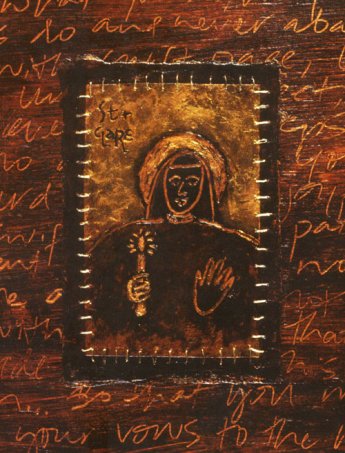
Artwork: detail from “Saint Clare” © Jan L. Richardson. To use this image, please visit this page at janrichardsonimages.com. Thank you!

This reflection originally appeared at The Painted Prayerbook. Clare’s blessing is taken from Regis Armstrong’s book Clare of Assisi: Early Documents.

Feast of Mary Magdalene

July 21st, 2011


At Her Prayers: Mary Magdalene with a
Book of Hours
© Jan L. Richardson

At this point in the year, we are well into Ordinary Time, so called because it is a season in the Christian year that is largely absent of major holy days. I know for lots of folks this season comes as a sweet relief after the wondrous but so very intense days between the beginning of Advent and the Day of Pentecost! With its different rhythms, there is yet much to savor in these days of Ordinary Time, as God invites us to notice the presence of the sacred in the midst of the habits and routines of our daily lives. And there are some  splendid opportunities for celebration in this season.

One such occasion for celebration happens tomorrow: it’s the Feast of Mary Magdalene, the ever-intriguing follower and friend of Jesus. Called by Christ to be the first to tell the news of his resurrection, the Magdalene became known in the Middle Ages as the “apostle to the apostles” for her role in proclaiming the good news.

The Middle Ages stirred up some great legends about the Magdalene, particularly in France, where Mary Magdalene was said to have journeyed after Christ’s ascension. The legends tell that she became a famous preacher (as a clergy chick I really like that one) and that her ministry in France included freeing prisoners from a jail. According to some legends, the Magdalene lived out her years as a hermit in the wilderness, clad only in her long hair. And at each of the liturgical hours, angels—so the legends say—would whoosh Mary up to heaven to join in the liturgy, then whoosh her back down to the wilderness until the next heavenly trip.

Though short on fact, the legends provide a charming window onto what many medieval folks thought of this woman whose ministry and message were so crucial in the life of the early Church and the spread of the Gospel. The medieval stories invite us to bring our own prayerful imaginations to the tale of Mary Magdalene and to listen our way into the wide gaps that are present in the handful of details that the Gospels offer about her life.

The Magdalene legends provided inspiration for a series I did some years ago called The Hours of Mary Magdalene; the image above comes from that series. Creating this mixed-media series, which incorporates paper collage, acrylic, and calligraphy and was inspired also by images of the Magdalene in medieval Books of Hours, was a wonderful way to climb into the story of Mary Magdalene. I’ve never seen her quite the same since then. Years later, she continues to tug at my imagination and prompts me to ask, What word is Christ calling me to proclaim in my own life? What good news am I being called to tell, and where?

I am open to going to France…

Earlier this year my remarkable singer/songwriter husband and I created a video that intertwines the images from The Hours of Mary Magdalene with his haunting song “Mary Magdalena.” If you journeyed with us here at Sanctuary of Women during Holy Week, this will be familiar to you, but on this eve of the Feast of Mary Magdalene, I wanted to share it again. Please note that if you click the Vimeo logo in the player below (in the bottom right corner), it will take you directly to a larger version of the video. We have also released the video on YouTube, where you can view it here.

May you have a festive Feast of Mary Magdalene! And many blessings to you in these days of Ordinary Time.

P.S. I’ve just launched a completely redesigned, brand-spankin’-new website at janrichardson.com and would love for you to visit!

Sanctuary Receives National Indie Excellence Award

June 16th, 2011

Summer greetings to you! And, to my friends in the Southern Hemisphere, a blessed wintertide! As we turn toward this new season (which has arrived in full force here in Florida), I’m delighted to share the news that In the Sanctuary of Women was selected as a winner in the National Indie Excellence Book Awards. Here’s the recent press release.

Sanctuary will soon be available in a Kindle version and is going into a new printing as well. It’s been wonderful to hear from folks who have been reading it, either on their own or as a way of staying connected with friends close at hand or far away.

I am pleased also to share the news that my book In Wisdom’s Path: Discovering the Sacred in Every Season has just been released as an ebook. For more info, visit the Books page at janrichardson.com.

Many blessings to you in this season, and may you find sanctuary in these days.